AI And Therapy: Is Your Daughter Using AI Instead of a Therapist?
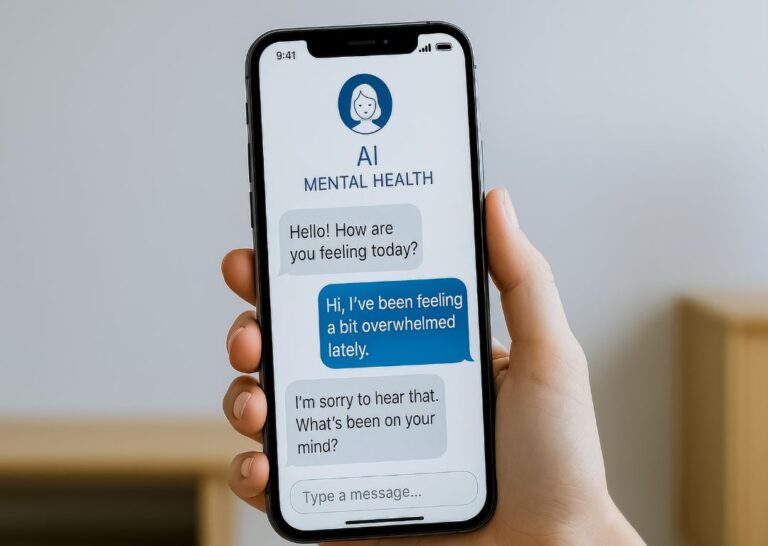
Do AI and therapy go hand in hand? We’re not so sure. Ever caught your daughter in her room with the door closed? She’s on her phone — but she’s not scrolling TikTok or texting her friends. She’s typing her feelings into an AI chatbot. Maybe she’s told it things she’s never told you. Maybe she finds it easier to be honest with a machine than with a real person. Maybe she doesn’t even realize there’s anything unusual about that. If this sounds familiar, you’re not imagining it — and you’re certainly not failing as a mother. This is happening in households everywhere right now, and it deserves an honest, clear-eyed conversation. Not a panicked one. An informed one.
AI And Therapy: Why Young Women Are Turning to AI for Emotional Support
Let’s start with empathy, because that’s always where the best conversations begin. There are real reasons your daughter might prefer typing her anxieties into an AI over calling a therapist or talking to you. AI chatbots are available at 2 a.m. when the anxiety hits. They don’t get upset. They don’t look worried in a way that makes her feel guilty. They don’t have their own needs, their own history, their own complicated feelings about who she’s becoming.
For a young woman who fears being a burden — and so many of them do — talking to something that can’t be burdened feels like a relief.
There’s also the stigma factor. Even in 2026, plenty of teenagers and young adults carry shame around mental health struggles. An AI doesn’t judge. It doesn’t tell her friends. It doesn’t mean she has to admit, out loud, to another human being, that she’s not okay. I understand the appeal. I really do. And I don’t think we help our daughters by dismissing it. AI and therapy is here for good, we just need to understand its role.
AI And Therapy: What AI Can — and Genuinely Cannot — Do
Here’s where I want to be honest with you, because this isn’t a simple good-or-bad story. AI and therapy opens doors. AI chatbots can be genuinely useful as a first step. They can help a young person articulate feelings she hasn’t found words for yet. They can offer grounding techniques, breathing exercises, and gentle prompts toward self-reflection. For someone who isn’t ready to talk to a human — and many young people aren’t, at first — an AI conversation can be the thing that opens the door.
Think of it like a journal that talks back. There’s value in that.
But here’s what AI cannot do, and what every parent needs to understand clearly:
AI cannot diagnose. It cannot tell the difference between teenage moodiness and clinical depression. It cannot identify the early signs of an eating disorder, a substance use problem, or a mental health crisis that requires real intervention. It is not trained the way a therapist is trained, and it doesn’t carry the professional and ethical responsibility that a therapist carries.
AI cannot build a real therapeutic relationship. Healing — deep, lasting healing — happens in the context of human connection. The research on this is clear and has been for decades. A good therapist doesn’t just ask the right questions. She notices the pause before the answer. She reads the room. She remembers what you said three sessions ago and connects it to what you’re saying now. She is present in a way that a language model, however sophisticated, simply is not.
AI cannot keep her safe in a crisis. If your daughter is in genuine distress — if she is having thoughts of self-harm, if her mental health is deteriorating — an AI chatbot is not equipped to respond the way that situation demands. This is not a small caveat. This is the part that matters most.
The Mother-Daughter Piece: What’s Really Going On
I’ve spent years writing and thinking about the mother-daughter relationship, and what strikes me most about this AI trend is what it tells us about connection — and disconnection. When a young woman would rather talk to an algorithm than to her mother, that’s not necessarily a reflection of your relationship’s failure. It may simply reflect her age, her development, her need for a space that feels entirely her own. Separation and individuation — the psychological process of becoming your own person — is healthy and normal. It’s supposed to happen.
But it’s worth asking gently: is the door between you two open?
Not open in the sense of “I’ve told her she can always come to me.” Open in the sense of: does she believe, based on experience, that coming to you with her darkest feelings is safe? That you won’t spiral? That you won’t fix before you listen? That she won’t end up taking care of your feelings about her pain? These are hard questions. I ask them with love, not judgment.
What You Can Do Right Now
You don’t need to confiscate her phone or stage an intervention. Here’s what actually helps:
Get curious, not alarmed. If you discover she’s using an AI for emotional support, ask about it with genuine interest rather than concern. “What do you like about it?” is a better opening than “I’m worried about you.”
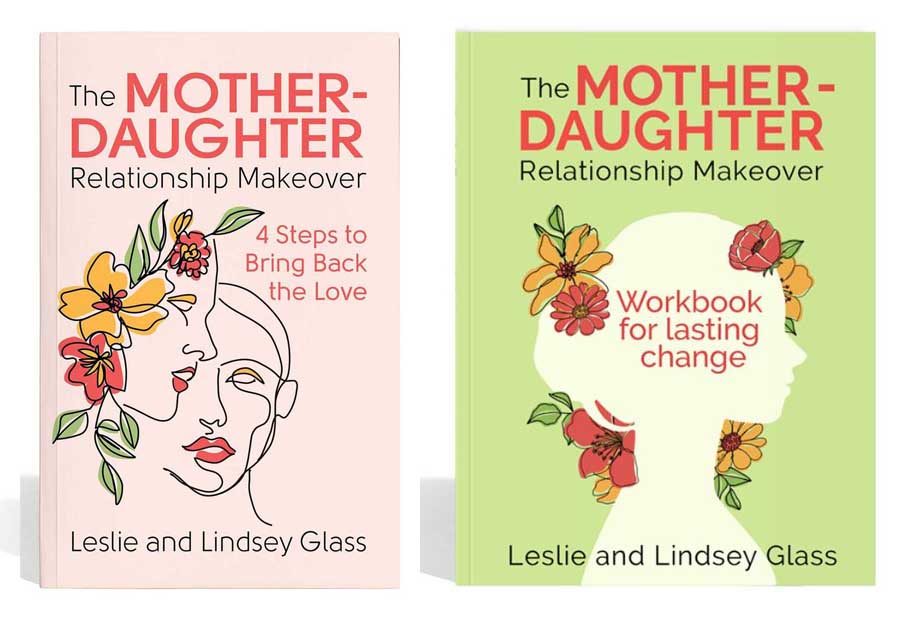
Keep working on your own side of the relationship. The Mother Daughter Relationship Makeover framework I write about comes back to this again and again: the most powerful thing a mother can do is keep showing up, keep listening, and keep doing her own work. You cannot drag your daughter into openness. You can only make openness feel safer over time.
Don’t let AI be the ceiling. If she’s using chatbots and she seems to be struggling, gently introduce the idea of a real therapist — not as a replacement for her AI conversations, but as an addition. Meet her where she is.
Know the warning signs. Withdrawal from friends and family, changes in sleep or eating, talk of hopelessness, loss of interest in things she used to love — these are signals that AI support is not enough and professional help is needed now.
The Bottom Line
AI is not the enemy. But it is also not a therapist, and it was never meant to be one. The teenagers and young women turning to it for support are telling us something important: they need more access to mental health care, more spaces where they feel safe to be honest, and more human connection that doesn’t cost them something emotionally.
Our job as mothers is not to compete with technology. It’s to be so genuinely present, so reliably safe, that the algorithm is a supplement — not a substitute.
She needs you. She may not know how to say it. But she does.
Lindsey Glass is the author of The Mother Daughter Relationship Makeover and the founder of ReachOutRecovery.com, a resource for families navigating addiction, mental health, and the relationships that hold us together.
Check Out My Books!
Like us on Facebook
Follow us on Instagram