The 7 Relationships That Shape Your Life — And Why Healing Them Changes Everything
I’ve spent most of my adult life thinking about relationships. As a daughter. As a partner. As someone in recovery. As a writer and advocate who has sat with hundreds of stories of families broken apart and — sometimes, beautifully — put back together. And here’s what I know: the quality of your life is largely determined by the quality of your relationships. Not your job. Not your zip code. Not your bank account. Your relationships.
That’s not a soft, feel-good statement. It’s one of the most well-supported findings in all of mental health research. The Harvard Study of Adult Development — one of the longest studies of human happiness ever conducted — found that close relationships, more than money or fame, keep people happy and healthy throughout their lives.
So which relationships matter most? In my experience — and in the work I do with mothers, daughters, families, and people in recovery — these seven are the ones that shape everything else.
1. Your Relationship With Yourself
Every other relationship on this list is downstream of this one.
How you talk to yourself, how much you trust yourself, what you believe you deserve — all of it flows from your relationship with your own inner world. If that relationship is built on shame, self-criticism, or a deep sense of not-enoughness, it will quietly poison every connection you try to build with someone else.
Recovery, in many ways, is fundamentally about this relationship. Addiction thrives in self-abandonment. Healing begins when you start showing up for yourself — honestly, compassionately, and consistently.
This is the work that never fully ends. And it’s the most important work there is.
2. Your Relationship With Your Parents
Whether your parents were loving, absent, complicated, or somewhere in between — the relationship you had with them in childhood wrote the first chapter of your story about what love is, what safety feels like, and what you have to do to belong.
Those early patterns don’t disappear when you grow up. They follow you into every significant relationship you’ll ever have — your friendships, your partnerships, your parenting. Understanding them isn’t about blame. It’s about awareness. You can’t rewrite a chapter you haven’t read.
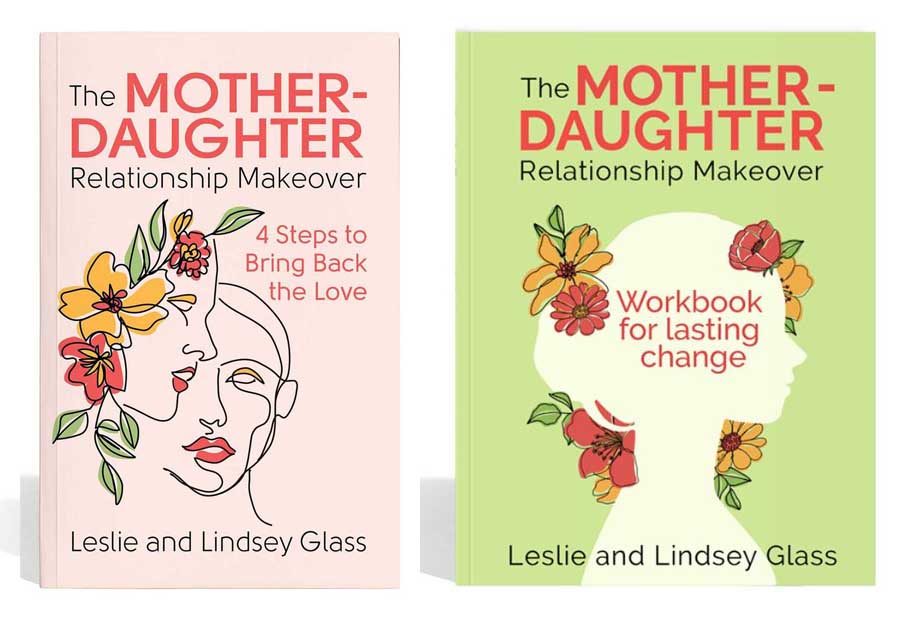
This is at the heart of everything my mother Leslie and I wrote in The Mother-Daughter Relationship Makeover. We didn’t just want to help mothers and daughters get along better. We wanted to help them understand where their patterns came from — so they could finally choose something different.
3. Your Relationship With Your Children
If the parent-child relationship shapes who we become, then the relationship we have with our own children is where we get to either repeat those patterns or — with intention and effort — transform them.
Parenting is the most humbling relationship I know. It asks you to love someone completely, unconditionally, and then slowly, painfully let them go. It also has a way of surfacing every unhealed wound you thought you’d buried.
The mothers and daughters I work with often discover that the conflict between them isn’t really about the present moment. It’s about old pain being triggered by new circumstances. When you do your own healing work, you don’t just change your life. You change the next generation’s starting point.
4. Your Relationship With an Intimate Partner
Romantic partnership — when it’s healthy — is one of the great teachers of adult life. It asks you to be vulnerable, to communicate when you’d rather shut down, to stay present when leaving feels easier.
It’s also where the unfinished business of childhood shows up most vividly. The ways your partner frustrates you, the arguments that never seem to resolve, the distances that open up between you — these are rarely just about the surface issue. They’re invitations to go deeper.
Healthy partnership doesn’t mean the absence of conflict. It means having the tools, the willingness, and the mutual commitment to work through it together.
5. Your Relationship With Your Community
We were never meant to do this alone.
One of the most devastating consequences of addiction — and of trauma, and of estrangement — is isolation. When we cut ourselves off from community, whether by choice or by circumstance, we lose one of our most essential sources of resilience.
Community can look like many things. A recovery group. A faith community. A neighborhood. A circle of friends who show up. What matters is the sense of belonging — the experience of being known and accepted by people who witness your ordinary life, not just your highlight reel.
If you’re rebuilding your life, rebuilding your community is not optional. It’s essential.
6. Your Relationship With a Mentor or Guide
Every person I know who has made a significant transformation in their life had someone who helped them see what they couldn’t see on their own.
A therapist. A sponsor. A wise friend. A teacher who believed in them before they believed in themselves. Someone who had been where they were going and was willing to light the way.
These relationships are not luxuries. They are accelerants. Don’t try to do the hard work of becoming who you want to be entirely alone. Find your people. Ask for guidance. Let someone further down the road show you that where you’re trying to go is actually reachable.
7. Your Relationship With Something Greater Than Yourself
This one is different for everyone, and I want to hold it gently.
For some people, this is a relationship with God or a higher power. For others, it’s a sense of connection to nature, to humanity, to a purpose larger than their own comfort or survival. For many people in recovery, it’s the moment when the focus shifts from what can I get to what can I give — and everything changes.
What the research and my own lived experience both confirm is this: people who feel connected to something beyond themselves — who have a sense of meaning, of service, of being part of something that matters — are more resilient, more generous, and more at peace.
Whatever that looks like for you, nurture it. It will hold you up when everything else feels like it’s falling apart.
Healing One Relationship Changes All of Them
Here’s the thing about relationships: they don’t exist in isolation. When you do the work to heal your relationship with yourself, your other relationships shift. When you repair the bond with your mother or your daughter, you show up differently for your children, your partner, your community.
Healing is not a private act. It ripples outward in ways you can’t always predict or measure — but that are absolutely, undeniably real.
If you’re not sure where to start, start with yourself. Or start with the relationship that’s causing you the most pain right now. The entry point matters less than the decision to begin.
You don’t have to have it all figured out. You just have to take the next step.
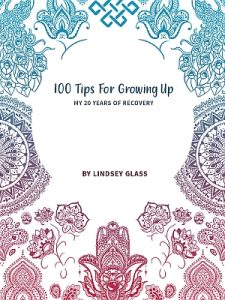
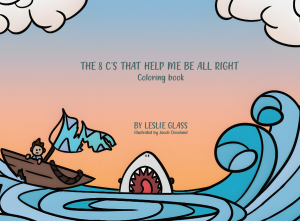
Lindsey Glass is the author of The Mother-Daughter Relationship Makeover and the founder of ReachOutRecovery.com. If you’re ready to begin healing your most important relationships, visit us at ReachOutRecovery.com or explore our books on Amazon.
Check Out My Books!
Like us on Facebook
Follow us on Instagram