How Healthy Boundaries Actually Bring You Closer
The relationship you’ve been longing for isn’t built on being everything to each other. It’s built on knowing where you each begin and end and that is not being your daughter’s best friend. Maybe you’ve always wanted to be your daughter’s best friend, or the mom your daughter tells everything to. Or maybe you’re the daughter who wishes your mother would just be your mom — not your therapist, not your confidante, not your shadow. Whatever side of this dynamic you’re on, chances are you’ve felt the particular ache of a mother-daughter relationship that’s either too entangled to breathe in, or too distant to feel real.
Here’s the thing that often surprises people: the path to a deeper, more genuine connection is not closing the distance by merging. It’s actually creating a little more space between you. Not cold distance. Healthy space. The kind that makes room for two real people to actually show up
The Friendship Trap
Our culture sends a lot of mixed messages about mother-daughter relationships. On one hand, we romanticize the “best friend” bond — the mom and daughter who shop together, share secrets, text constantly, and finish each other’s sentences. It looks beautiful from the outside. But inside many of these relationships, something is quietly off.
When a mother and daughter become best friends in the way peers are best friends, roles get blurry. The mother might start sharing too much — her fears, her marital problems, her financial stress — in ways that place an invisible weight on her daughter’s shoulders. The daughter might feel she can’t have her own life, opinions, or struggles without upsetting the delicate balance of the bond. This is called enmeshment, and it can feel like closeness while quietly preventing both women from fully being themselves.
On the other end of the spectrum, some mothers and daughters have overcorrected — or been pushed apart by old wounds — and now relate to each other with a kind of careful politeness that keeps them safely distant. They love each other, but they don’t really know each other.
Both patterns are more common than most people realize. And both can change.
What Boundaries Actually Are (Hint: Not Walls)
When people hear the word “boundaries,” they often picture rejection — doors slamming, relationships shrinking, love being withheld. But healthy boundaries aren’t about pushing people away. They’re about being honest about who you are, what you need, and what you can genuinely offer.
A boundary isn’t “I don’t want you in my life.” It’s “I want you in my life, and this is what that looks like for me.” That’s actually a profound act of love — choosing to show up authentically rather than performing a role that leaves everyone feeling vaguely unsatisfied.
For mothers, a healthy boundary might sound like: “I’m not going to share my worries about your father with you — that’s not fair to put on you.” For daughters, it might sound like: “I love you, and I need to make this decision for myself, even if it’s not what you would choose.” Neither of these statements ends a relationship. They make it more real.
The Signs Your Dynamic Needs Recalibration
Whether you’re too close or too far, there are telltale signs that the relationship is out of balance. See if any of these feel familiar:
If you lean toward enmeshment: You feel responsible for managing each other’s emotions. One of you struggles to make decisions without the other’s input. Your moods are deeply affected by each other’s moods. Disagreements feel catastrophic. You struggle to imagine having your own identity outside the relationship.
If you lean toward distance: Conversations stay surface-level, even after years. One or both of you avoids vulnerability because it’s never felt safe. There’s a quiet grief about the relationship you wish you had. You love each other but don’t really like each other much. Visits feel obligatory rather than nourishing.
How to Start Shifting the Pattern From Being Your Daughter’s Best Friend
You don’t have to overhaul the relationship overnight. Small shifts, made consistently, create real change over time. Here are a few places to start:
Name the dynamic, gently. You don’t need to launch into a heavy conversation to begin. Even just privately acknowledging — to yourself or a therapist — that the pattern exists is a meaningful first step.
Practice being curious instead of controlling. Whether you’re a mother trying to let go or a daughter trying to let someone in, curiosity is a safe doorway. Ask questions. Listen without needing to fix or steer. Let her surprise you.
Say what you need without over-explaining. Healthy boundaries don’t require a case to be made. “I need some time to think about that” or “I’d love to talk, but not today” are complete sentences. You don’t have to justify your limits to earn them.
Repair instead of rehearsing. Both enmeshment and distance often grow around old wounds that were never addressed. If there’s something unspoken between you, even a small acknowledgment — “I know things have been hard between us, and I want that to change” — can open a door that’s been shut for years.
Get support. Shifting deep relational patterns is hard to do alone. A therapist who specializes in family dynamics or intergenerational relationships can help you navigate this with more clarity and compassion than you’d have flying solo.
Closer Doesn’t Mean Merged
The mother-daughter relationship is one of the most formative bonds in a woman’s life. It shapes how we see ourselves, how we relate to others, and what we believe we deserve. That’s exactly why it’s worth the discomfort of doing it differently.
You can love each other deeply and still have your own inner lives. You can be close and still be two separate people. In fact, that’s the only kind of closeness that lasts — the kind that doesn’t ask you to disappear into it.
The goal isn’t to become best friends. The goal is to become real ones.
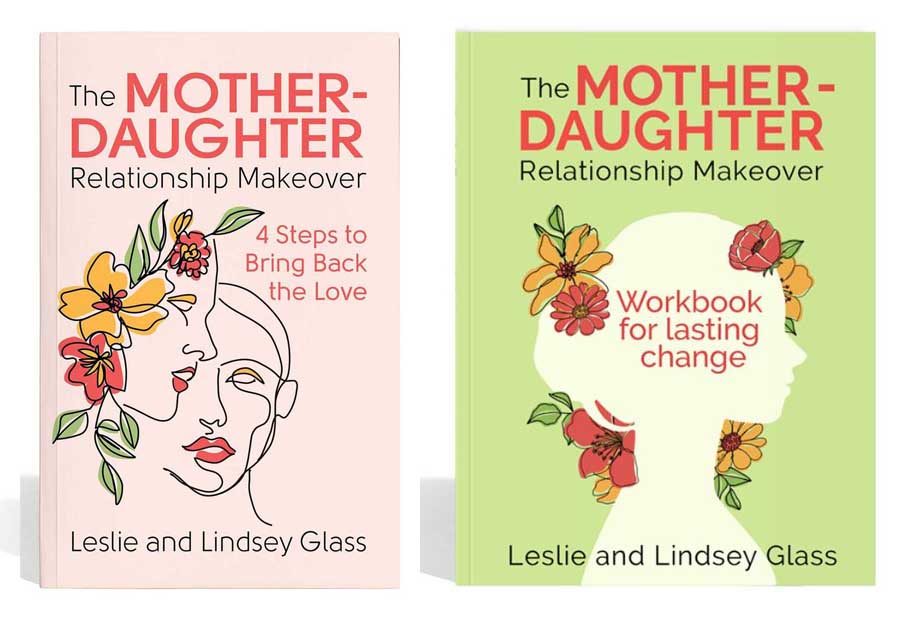
Check Out My Books!
Like us on Facebook
Follow us on Instagram