How Personal Training and Pilates Classes In Santa Monica Support Long-Term Recovery and Wellness
We love exercise for recovery and wellness. Personal training and Pilates Classes in Santa Monica can be a turning point for anyone who wants to recover from physical setbacks, rebuild confidence, and create a healthier routine that actually lasts.
Physical recovery is rarely as simple as waiting for discomfort and cravings to disappear and then jumping straight back into an old workout routine.
I learned this lesson after taking a long break from structured exercise and assuming I could return at the same intensity I had left.
The first workout felt fine.
The second exposed every weakness I had ignored.
My balance was off, my mobility had declined, and movements that once felt automatic suddenly required concentration.
That experience changed the way I looked at exercise.
Training is not just about burning calories or lifting heavier weights.
It is about understanding how the body moves today and building from that point.
For people who need a more structured and individualized approach, personal training in gym environments can provide the guidance, progression, and accountability needed to train with greater purpose.
Why Long-Term Recovery Requires Exercise
Rest is important after an injury, an extended period of inactivity, or a physically demanding phase of life.
However, rest alone does not rebuild strength, coordination, balance, or confidence in movement.
Those qualities return through carefully planned activity.
A person recovering from knee discomfort, for example, may avoid squats because the movement feels uncomfortable or intimidating.
Avoidance can feel safe in the short term, but it does not necessarily address poor ankle mobility, weak glutes, limited hip control, or incorrect movement mechanics.
A qualified fitness coach can observe the entire movement pattern rather than focusing only on the area where discomfort is felt.
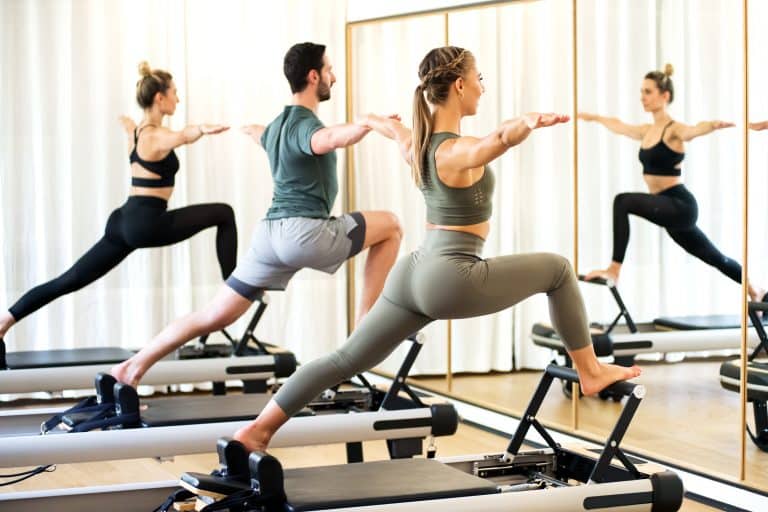
Complementary movement practices, including Pilates classes Santa Monica, can also help people work on body awareness, controlled movement, balance, and core stability as part of a broader wellness routine.
This matters because the human body works as a connected system.
The position of the foot can affect the knee.
Hip stability can influence lower-body alignment.
Limited shoulder mobility can cause the neck or lower back to compensate during upper-body exercises.
A good recovery-focused fitness plan identifies these connections and gradually improves them.
How Individualized Strength Training Supports Recovery
Generic workout plans are built for average situations.
Real people are rarely average.
Two individuals of the same age and body weight can have completely different training needs.
One may have excellent cardiovascular endurance but poor mobility.
Another may be naturally flexible but lack muscular stability.
Someone else may be returning after surgery, pregnancy, a sports injury, or several years away from exercise.
Individualized strength training allows exercises to be selected according to current ability rather than ego or expectations.
A trainer might replace a difficult barbell movement with a supported variation.
The load may be reduced while the range of motion is gradually increased.
A machine exercise may be used temporarily before progressing to free weights.
These adjustments are not signs of an easier workout.
They are signs of smarter programming.
Progression Should Feel Challenging, Not Reckless
One mistake I made when returning to exercise was measuring every session by exhaustion.
If I was not completely drained afterward, I assumed the workout had been ineffective.
That approach quickly became difficult to maintain.
Constant soreness affected my sleep, reduced motivation, and made everyday movement uncomfortable.
A better approach is progressive overload applied with patience.
This can involve adding a small amount of weight, performing one extra repetition, improving technique, increasing range of motion, or reducing the amount of assistance used during an exercise.
Small improvements may not look dramatic from one session to the next.
Over several months, however, they can completely change strength, posture, movement quality, and confidence.
With Pilates Classes In Santa Monica Residents Develop Better Movement
Strength training and Pilates are often treated as competing exercise methods.
In reality, they can complement each other extremely well.
Pilates classes Santa Monica residents attend often focus on controlled movement, breathing, alignment, core stability, and body awareness.
These qualities can transfer directly into strength training and daily movement.
Consider a person who struggles to maintain a neutral spine while performing loaded exercises.
Adding more weight will not automatically solve the problem.
Learning how to control the pelvis, engage the deep core muscles, and coordinate breathing may be more useful at that stage.
Pilates-based movement can help develop that awareness.
The goal is not simply to become more flexible.
It is to gain control within a usable range of motion.
Pilates Classes in Santa Monica Is More Than Abdominal Exercise
Many people think core training means endless crunches.
The core has a much broader role.
It helps transfer force between the upper and lower body, supports the spine, and contributes to stability during lifting, walking, running, and rotational movements.
I noticed the difference personally when I stopped treating core work as a five-minute finisher and started focusing on controlled exercises.
My squat position became more stable.
Single-leg exercises felt less shaky.
Even carrying heavy grocery bags became easier because I was better able to maintain posture under an uneven load.
This is where Pilates and resistance training can work together effectively.
One develops awareness and controlled stability, while the other builds the strength needed to apply that control under increasing resistance.
Pilates Classes In Santa Monica Combine Strength, Mobility, and Recovery Work
A sustainable fitness routine should not depend on one type of exercise.
The body needs different forms of physical challenge.
Resistance training helps maintain and build muscle.
Mobility work supports comfortable joint movement.
Cardiovascular exercise improves endurance and work capacity.
Recovery practices help the body adapt to training stress.
The balance between these elements depends on the individual.
Someone returning from a long break may begin with two or three strength sessions each week, regular walking, and dedicated mobility work.
Another person with a stronger training background may handle a higher workload but still benefit from Pilates sessions and planned recovery days.
More exercise is not automatically better.
The right amount of exercise is the amount a person can recover from, adapt to, and perform consistently.
Pilates Classes In Santa Monica ProvesTechnique Matters More During a Comeback
Returning to exercise can be psychologically challenging.
You remember what you used to lift.
You remember how fast you used to run.
You remember exercises that once felt easy.
The temptation is to chase old numbers immediately.
That is where technique often starts to break down.
A skilled personal trainer can provide immediate feedback on posture, breathing, joint alignment, tempo, and exercise execution.
Small corrections can make a significant difference.
For example, slowing down the lowering phase of a squat can improve control without adding weight.
Adjusting foot position during a lower-body movement may improve comfort.
Changing the angle of a pressing exercise can reduce unnecessary strain while still training the target muscles.
These details are difficult to notice when training alone, especially when fatigue sets in.
Pilates Classes In Santa Monica Help Turn Recovery Into a Routine
Motivation is unreliable.
Some mornings, training feels exciting.
For others, staying in bed feels like the better option.
A structured coaching relationship adds accountability without depending entirely on motivation.
The benefit is not simply having someone count repetitions.
Good coaching creates a plan, tracks progress, adjusts exercises, and helps prevent the all-or-nothing mindset that causes many people to quit.
I have found that consistency becomes easier when the goal is simply to complete the planned session rather than achieve a personal record every time.
Some workouts feel exceptional.
Some feel average.
Both still contribute to progress.
That mindset is especially important during long-term recovery.
Pilates Classes In Santa Monica Build Confidence Through Measurable Progress
Physical recovery has an emotional side.
After an injury or extended break, people often stop trusting their bodies.
A staircase looks more intimidating.
A heavy object feels risky to lift.
A movement associated with previous discomfort creates hesitation before it even begins.
Gradual training can rebuild that trust.
The process might start with a supported squat to a box.
Later, the support is removed.
Then resistance is added.
Eventually, the person realizes that a movement they once feared has become routine.
This type of progress is meaningful because it extends beyond the gym.
Improved strength can make travel easier.
Better balance can increase confidence during outdoor activities.
Greater mobility can make sitting, standing, reaching, and carrying feel less restrictive.
Pilates Classes In Santa Monica Are A Sustainable Approach to Wellness
Long-term wellness does not come from one perfect workout program.
It comes from building a system that can adapt when life changes.
Work becomes busy.
Travel interrupts routines.
Energy levels fluctuate.
Minor aches appear.
A sustainable program accounts for these realities instead of pretending they do not exist.
The combination of personalized strength coaching and Pilates-based movement can create a well-rounded approach to fitness.
Strength work develops muscular capacity and resilience.
Controlled movement improves awareness, stability, and coordination.
Together, these methods can help people move beyond short-term recovery and toward lasting physical independence.
The most successful fitness journeys are rarely the most dramatic.
They are built through ordinary sessions completed consistently.
They involve learning when to push harder and when to reduce intensity.
They require attention to technique, recovery, sleep, nutrition, and stress.
Most importantly, they teach people to work with their bodies rather than constantly fighting against them.
Recovery is not about returning to the exact person you were before an injury, setback, or long break.
It is an opportunity to rebuild with better habits, stronger movement patterns, and a clearer understanding of what your body needs.
When training is personalized, progressive, and supported by intelligent movement practices, fitness becomes more than a temporary project.
It becomes part of a sustainable approach to long-term health and wellness.
More Articles About Exercise In Recovery
How Exercise Can Prevent Relapse
Exercise Screening Can Save Your Life
Physical Activity Aids Addiction Recovery