We’ve Created Language like “Tough Conversations” and “Radical Honesty” But Why?
I went to a fabulous event last week where a speaker shared the idea of how we are making conversations and communication harder by thinking of them as ‘tough conversations’ or using ‘brutal honesty’. This hit a note for me because in recovery we have a saying, “say what you mean without saying it mean.” That line is meant to indicate clear communication but communication that lends itself towards harmony, not discord. I agreed with this speaker’s idea that we are setting ourselves up for more strife than necessary when we use harsh language around communication.
See, most of us walk into hard talks with our mothers, daughters and partners already braced for a fight. We refer to them as “tough conversations.” We promise ourselves we’ll be “brutally honest.” Then we wonder why it goes badly. I used to do this all the time. I’d rehearse in the car, line up my points, and walk in ready for battle. I’d usually leave having “won” and feeling worse. The other person felt worse too.
Here’s what the basic idea he was sharing. The way we name a conversation shapes how it goes. If you go in expecting it to be tough, you’ll usually make it tough.
Why “tough conversations” work against us
When we label a talk as tough, our bodies hear “danger.” Our shoulders tighten, our voices get sharper, and we start listening for what we’ll argue with instead of what the other person means. The other person feels it right away and braces too. Now two defended people are trying to connect, and it rarely works.
“Brutal honesty” has a similar problem. We say it as if the brutal part is a virtue. But brutality usually serves the person speaking, not the person listening. It lets us unload something we’ve been carrying without caring how it lands. Honesty and kindness aren’t opposites. The truth almost always goes over better when it’s said with care.
And underneath both is the idea that someone has to win. With a mother or a daughter, there’s no prize for winning. If one of you loses, the relationship loses too.
Seven ways to take the tough out of conversations
1. Change what you call it. Before you start, stop calling it a “tough conversation” in your head. Call it a catch-up, a check-in, or simply “talking about the holidays.” It sounds small, but the word you pick sets the tone your body brings into the room.
2. Start with why you’re there. Lead with the relationship, not the problem. “I want us to have a good Thanksgiving, and I’d love to figure out how” lands very differently from “We need to talk about last year.”
3. Pick a good moment. Not at the dinner table, not in the car on the way to a party, and never by text at 11 p.m. Choose a time when you’re both rested, fed and not rushing. Ask first: “Is now a good time, or would later be better?”
4. Be curious instead of building a case. Most of us show up with evidence. Try showing up with questions. “What was that like for you?” or “Help me understand what you meant” opens a door that a list of grievances slams shut.
5. Be honest, not brutal. Say the true thing, and say it about yourself. “I felt hurt when the plans changed without me” is honest. “You always do this” is brutal, and it’s usually not even accurate.
6. Say one thing, not ten. It’s tempting to bring up everything at once while you have the chance. Don’t. Pick the one thing that matters most today. Everything else can wait, and it often turns out to matter less than you thought.
7. Let it be unfinished. You don’t have to settle everything in one sitting. “Can we pause here and pick this up next week?” isn’t avoiding the conversation. It’s protecting it. Some of the best progress happens after you’ve both had time to think.
Differences are a good thing
A lot of conflict between mothers and daughters comes from a quiet belief that we should see things the same way. When we don’t, it feels like rejection. Mom thinks, “After everything, she doesn’t value what I value.” The daughter thinks, “She’ll never accept who I am.”
But different isn’t wrong. It’s often a sign that things went right. A mother raises a daughter to think for herself, and then the daughter does. Her choices about work, money, faith, marriage or how to raise kids may not look like her mother’s. That’s not a betrayal. It’s growing up.
Differences also make a relationship richer. A mother brings experience and perspective that only time gives you. A daughter brings a fresh view of a world that keeps changing. When we stop trying to convert each other, we can start learning from each other.
The goal isn’t to agree on everything. The goal is to stay close while you don’t. Try saying out loud, “We see this differently, and that’s okay.” It takes the pressure off both of you, and it means the difference doesn’t have to become a fight.
Tough Conversations: Frequently Asked Questions
Isn’t softening it just avoiding the truth?
No. You can say exactly what’s true without making it a weapon. Taking the tough out changes how you say it, not what you say. If anything, the other person is more likely to actually hear the truth when they don’t feel attacked.
What if she gets defensive anyway?
She might, especially at first. Defensiveness is usually fear, not a verdict on you. Don’t match it. Slow down and say something like, “I’m not trying to blame you. I just want us to understand each other.” If it keeps escalating, it’s okay to pause and come back to it.
What if the thing I need to say really is serious?
Some conversations are heavy, like an old hurt, a betrayal or something that happened in childhood. You don’t have to pretend they’re light. But you can still choose a calm moment, start with why you’re there, and focus on how it affected you rather than what kind of person she is. Serious doesn’t have to mean brutal.
How do I stay calm when she pushes my buttons?
Expect it. If you know the comment that always gets you, plan your response before you walk in. Take a breath before you answer, and notice if you suddenly feel 12 years old. That’s usually the old wound talking, not the present moment. If you need to, say, “Give me a minute,” and step away.
Can we have this conversation over text?
Text is fine for logistics and for “Can we talk this weekend?” It’s a poor place for anything emotional. Tone disappears, and you’ll each fill the gaps with the worst version. If you can, talk in person or on the phone. If text is truly all you have, keep it short and kind, and suggest talking live.
What if she won’t talk to me at all?
You can’t make someone come to the table. What you can do is leave the door open without pushing: “I’d love to talk whenever you’re ready. No pressure.” Then give it time. Pushing harder usually pushes them further away.
What if we just never agree?
That’s okay, and it’s more common than not. The goal was never to agree on everything. The goal is to stay connected while you see things differently. “We see this differently, and I still love you” can be the whole conversation.
One thing to try this week
Think of a conversation you’ve been dreading. Now give it a new name, one that sounds like something you’d actually want to have. Then decide on the one thing you most want the other person to understand, and the one question you want to ask them.
That’s it. No speech, no list, no armor.
You might be surprised how much lighter it feels. The conversation was never the tough part. Going in ready for battle was.
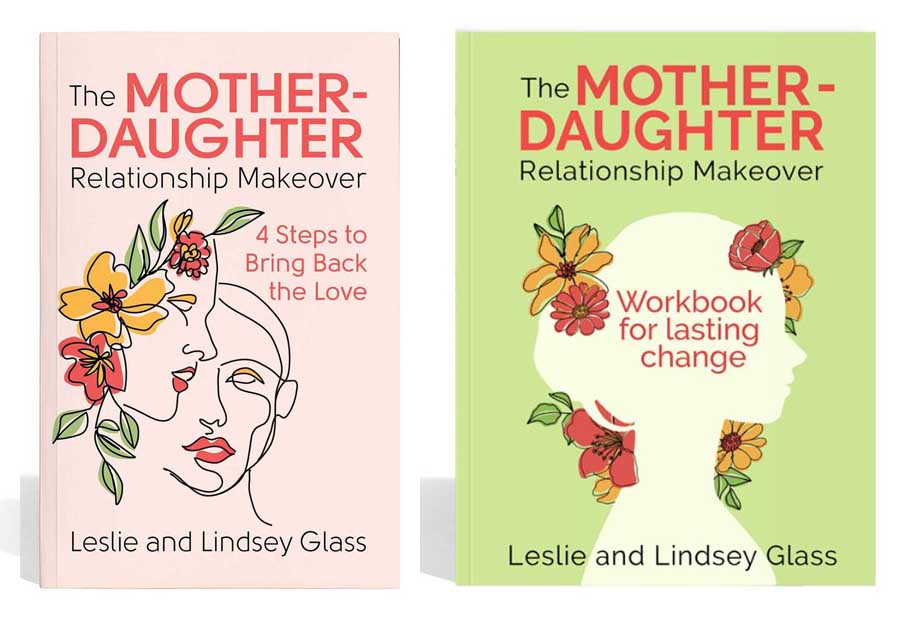
Lindsey Glass is the author of The Mother Daughter Relationship Makeover and the founder of ReachOutRecovery.com, a resource for families navigating addiction, mental health, and the relationships that hold us together.
Check Out My Books!
Like us on Facebook
Follow us on Instagram